
Practical Tips for Eating for Gut Health with Whole Foods
Eating for gut health has become a meaningful focus for many people today, especially as we understand more about how digestion impacts energy, mood, immunity, and overall well-being. In India, where our meals naturally include a variety of grains, pulses, spices, and seasonal produce, supporting gut health through whole foods can be both enjoyable and practical. This guide offers simple ways to use everyday ingredients to nourish your digestive system gently and consistently.
At The Gut Health, we believe that small, sustainable food habits can make a real difference. This article walks you through easy, accessible ways to use whole foods to support a healthier gut, in a calm and practical manner.
Why Eating for Gut Health Matters
Your gut houses a diverse community of microorganisms that interact with what you eat. While the science is still evolving, many people find that eating more whole, minimally processed foods helps them feel lighter, more comfortable, and more in tune with their digestion.
Whole foods provide natural fibre, antioxidants, and compounds that support digestion in a balanced way. Unlike highly processed foods, they tend to be gentler and more predictable for most people.
How Whole Foods Support Eating for Gut Health
Whole foods are ingredients that come as close to their natural form as possible—such as vegetables, fruits, whole grains, legumes, nuts, seeds, and herbs. They offer a steady supply of nutrients that can support your gut environment. Below are some simple explanations of how they help.
Natural Fibre Helps Keep Digestion Steady
Fibre adds bulk to meals and supports regularity. Indian meals already include many natural sources of fibre. Some everyday examples include:
- Whole grains like atta, bajra, jowar, and brown rice
- Legumes such as moong dal, masoor dal, rajma, and chana
- Fruits like guava, apples, bananas, and papaya
- Vegetables including carrots, beans, spinach, and okra
Fermented Foods Add Variety
Fermented foods can be a gentle addition to your meals. Items like curd, homemade buttermilk, idli, dosa batter, and pickles (in moderation) can bring natural diversity to your diet. People often find that including small portions of these foods regularly helps them feel more comfortable after meals.
Spices Offer Natural Support
Indian spices are more than flavour enhancers. Many traditional spices are known for their calming and balancing properties. A few examples include:
- Ajwain, often used to ease heaviness after meals
- Jeera, commonly added to dal and sabzi for its gentle digestive support
- Turmeric, used widely in Indian cooking for its warming nature
- Ginger, added to chai or sabzi for its soothing effect
Practical Ways to Eat More Whole Foods Every Day
You do not need drastic changes to support your gut. Small, steady shifts work beautifully. Here are practical tips that fit into most Indian lifestyles.
Choose Whole Grains When Possible
Simple swaps can make a big difference. You can choose:
- Rotis made with atta instead of refined flour
- Dosa made with traditional rice-lentil batter instead of instant mixes
- Bajra or jowar rotis a few times a week for variety
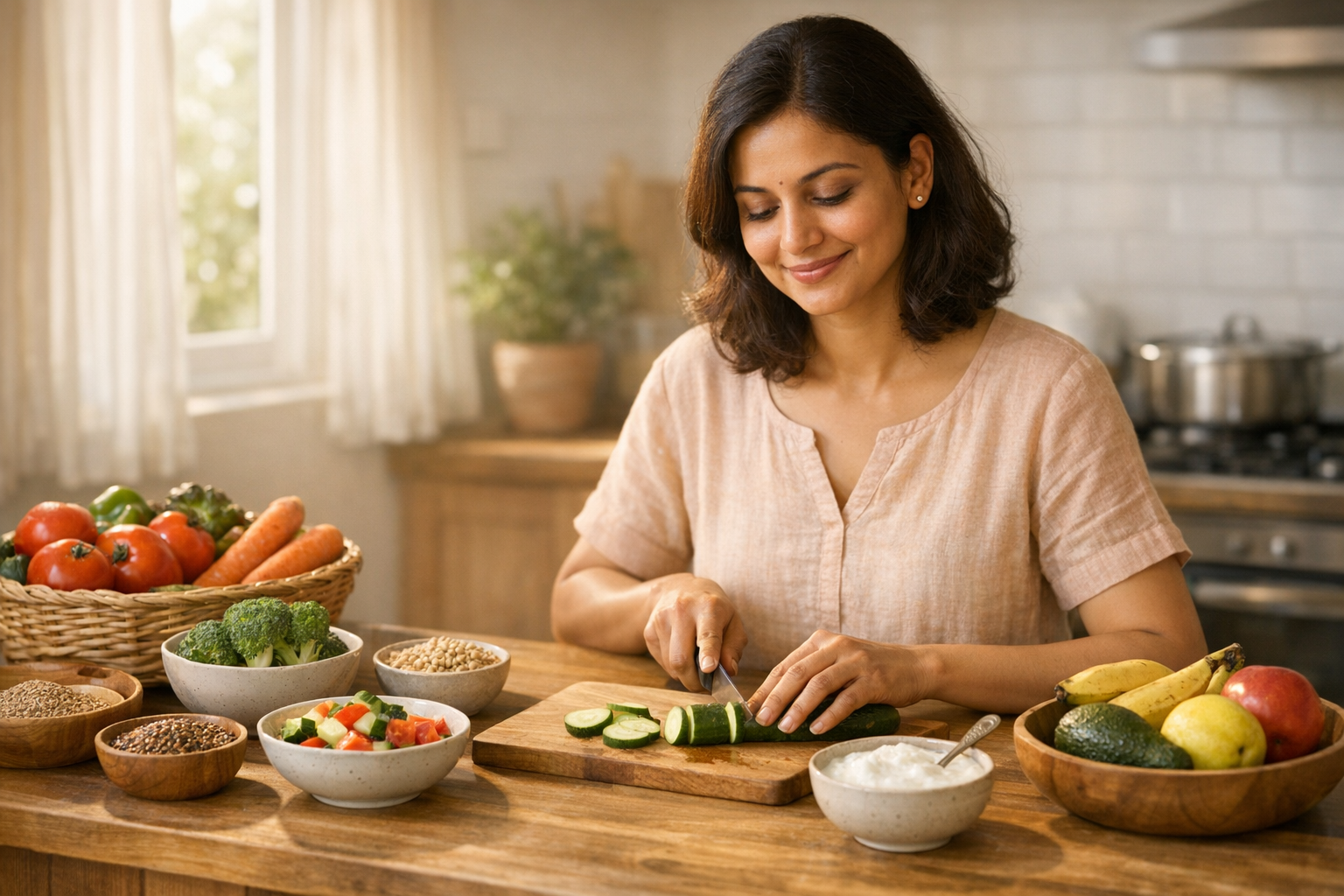
Add One Extra Vegetable to Each Meal
Vegetables provide fibre and natural plant compounds. You can:
- Prepare a small side sabzi with lunch
- Add extra vegetables to khichdi, pulao, or upma
- Mix colourful vegetables into dals or soups
Include a Source of Fermented Foods Daily
Even a small serving can be helpful. For example:
- A bowl of homemade curd with lunch
- Buttermilk after meals
- Traditional fermented foods like idli, dosa, or dhokla
Keep Snacks Simple and Whole
Instead of packaged snacks, you can choose whole-food options such as:
- Roasted chana or peanuts
- Fresh fruit
- Homemade chikki made with jaggery and nuts
- Sprout salads with lemon and spices
Be Mindful with Spices
Using spices thoughtfully can add comfort to your meals. You might try:
- Starting your day with warm water and a little ginger
- Adding jeera or coriander powder to dals and vegetables
- Using turmeric in curries or milk
Building Gentle Eating Habits
Along with choosing whole foods, simple lifestyle habits can support how your gut feels every day.
- Eating at regular times instead of skipping meals
- Chewing food slowly to make digestion easier
- Staying hydrated with water, herbal teas, or warm liquids
- Including movement, such as walking, yoga, or light stretching
These habits help your body settle into a natural rhythm, which many people experience as improved comfort and regularity.
Creating Gut-Friendly Meals at Home
You can use whole foods to make nourishing meals without complicated recipes. For example:
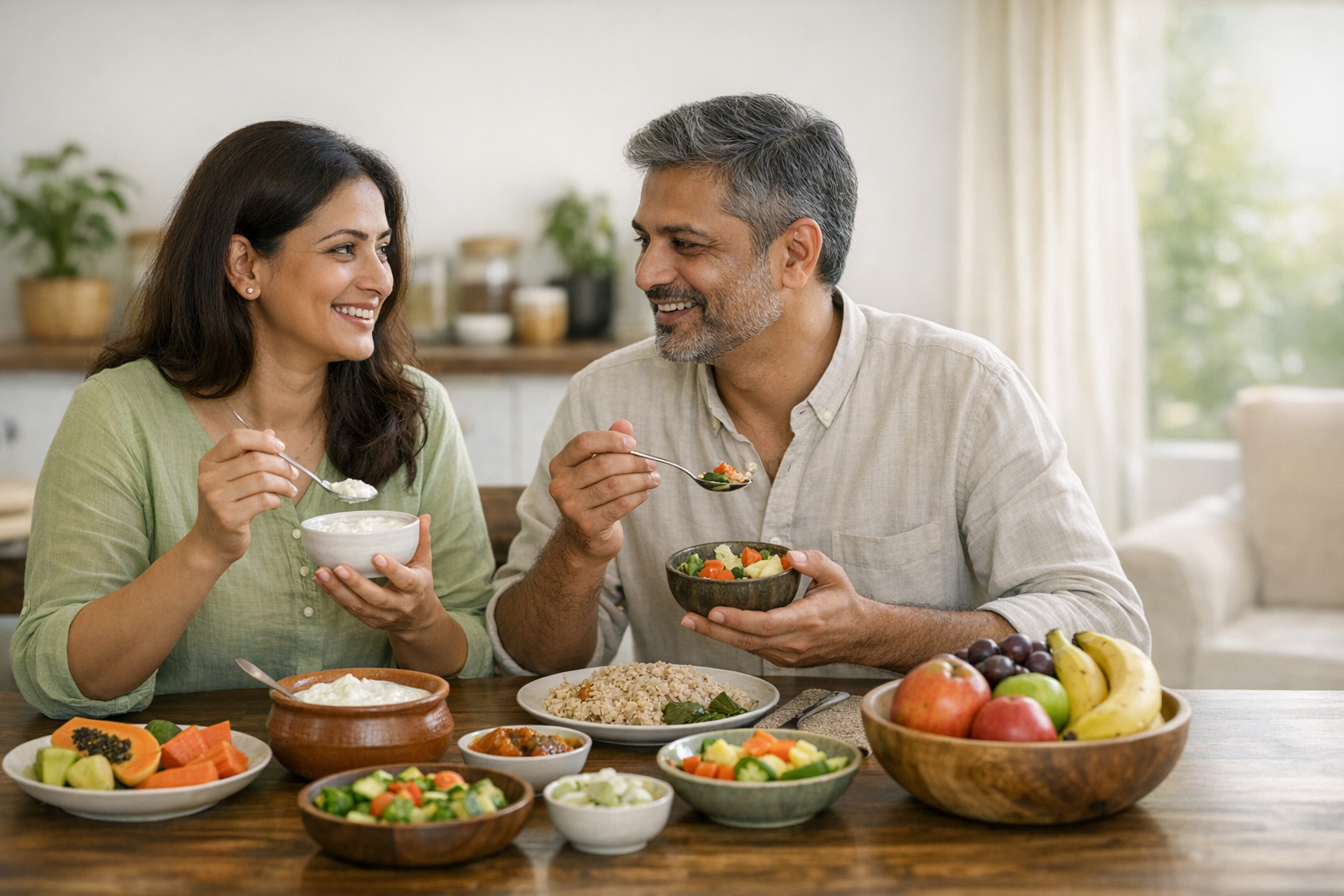
- A bowl of dal, rice, and a vegetable sabzi with curd on the side
- Khichdi with ghee, vegetables, and a simple salad
- Upma loaded with vegetables and served with chutney
- Rotis with sabzi, dal, and a piece of fruit
These meals use familiar ingredients but naturally support eating for gut health. They are grounding, gentle, and satisfying.
Conclusion: Eating for Gut Health Is About Consistency
When it comes to eating for gut health, small daily choices matter more than strict rules. Whole foods offer a simple way to nourish your digestive system without complication. Whether you enjoy more seasonal vegetables, include a spoon of homemade curd, or choose whole grains more often, each step helps create a supportive environment for your gut.
If you’d like to explore more calm, informative guidance on digestive wellness, you can visit theguthealth.in or browse the blog section at https://theguthealth.in/blog/ for additional insights.
With steady habits and a kind approach to your meals, your gut can feel more supported every day.