
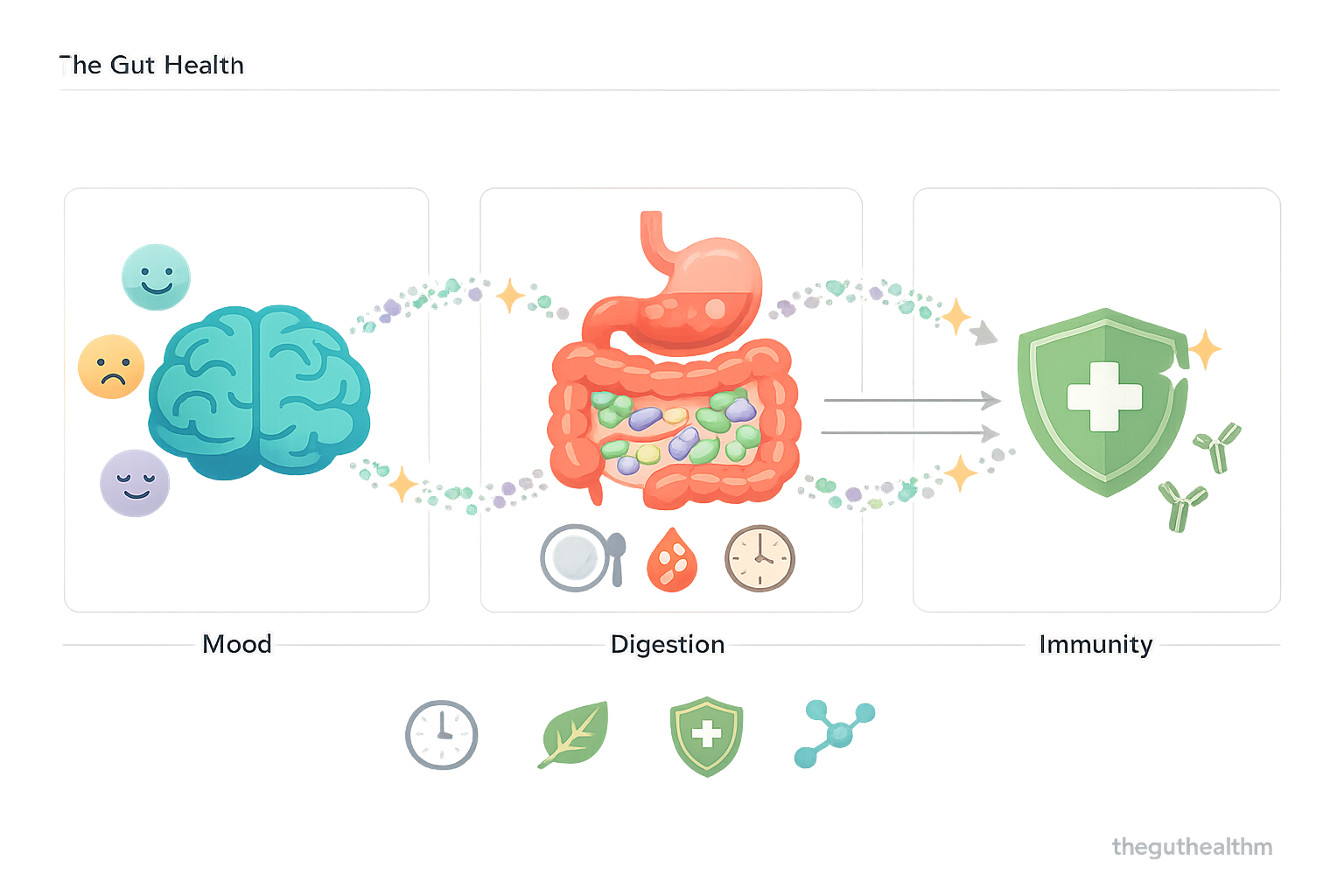
How brain gut connection affects digestion, mood, immunity
The relationship between the mind and the digestive system has fascinated researchers for years. Today, we know that the brain and the gut communicate constantly, influencing everything from digestion to emotional wellbeing. This communication network, often called the brain gut connection, plays a significant role in how we feel physically and mentally.
For many people, especially in fast-paced environments like urban India, stress, irregular eating habits, and poor sleep can disturb this delicate balance. Understanding how this connection works can help us make more informed choices about lifestyle and diet. At The Gut Health, we focus on sharing simple, science-based insights to help people build better daily habits. You can explore more on topics like this at theguthealth.in/blog.
What is the Brain Gut Connection?
The brain and the gut communicate through a two-way network known as the gut-brain axis. This system links the nervous system, hormones, immune responses, and gut microbes. When everything is in harmony, digestion feels smoother, moods feel more stable, and immunity feels more resilient.
The Role of the Vagus Nerve
A major part of this connection is the vagus nerve, which acts like a communication highway. It sends signals from the gut to the brain and back again. This means the gut can influence aspects of mood, while the brain can influence digestion.
Gut Microbes and Brain Signals
The trillions of microbes living in the gut also play a part in this communication. They produce certain compounds that can influence mood and stress responses. When these microbes are balanced, they generally support smoother communication along the gut-brain axis.
How the Brain Gut Connection Affects Digestion
Most people have experienced digestive changes during stress—such as a churning stomach before an exam or reduced appetite during emotional distress. These are examples of how strongly the brain influences digestive function.
- Stress can affect digestive movement: The gut may speed up or slow down, leading to discomfort.
- Nervous system shifts affect enzymes: Stressful thoughts can influence stomach acid and enzyme production.
- Emotional states may affect appetite: Some people eat more, while others eat less when stressed.
On the other hand, gut discomfort can also affect mood. When the digestive system feels heavy, gassy, or irritated, it is natural to feel more tense or distracted.
Impact on Mood and Emotional Wellbeing
The gut produces and influences the availability of certain compounds that play a role in emotional regulation. This is one reason the gut is sometimes called the “second brain.” While mood is shaped by many factors, a calm and balanced gut environment may support a more stable emotional state.
Why We Feel Emotions in the Stomach
Many people describe emotions as sensations in the belly—”butterflies”, tightness, or heaviness. This happens because the gut and brain share the same communication pathways. When the brain senses emotional shifts, the gut reacts almost instantly.
Daily Habits That Influence Mood Through the Gut
- Regular, balanced meals instead of long gaps between eating
- A diet rich in plant fibres such as dals, vegetables, and whole grains
- Hydration throughout the day
- Mindful eating to reduce unnecessary stress during meals
These simple habits often help support a calmer gut environment, which in turn may help support emotional balance.
Connection to Immunity
Much of the body’s immune system is linked to the gut. A well-functioning gut barrier and a healthy microbial balance support immune responses. When the brain is stressed, it may influence gut function, which can affect how the body responds to everyday challenges.
For example, high stress levels over time may disturb digestion or appetite. This can indirectly affect nutrient absorption, energy levels, and overall vitality. Supporting the gut-brain axis through daily lifestyle choices may help the body stay more balanced.
How to Support the Brain Gut Connection
Small, practical steps can help bring more harmony to this connection. These are not medical treatments, but simple lifestyle habits that many people find useful.
1. Eat Mindfully and Regularly
Rushed meals, irregular timings, or eating while distracted can affect digestion. Setting aside a few calm minutes for meals helps the body switch into a relaxed state that supports better digestion.
2. Include Gut-Friendly Foods
Indian diets naturally offer many options that support gut wellbeing.
- Fibre-rich foods: sabzi, fruits, whole grains, sprouts
- Fermented foods: idli, dosa batter, dahi
- Hydrating foods: coconut water, buttermilk, fresh seasonal fruits
3. Prioritise Sleep
A consistent sleep routine helps regulate hormones that influence both digestion and mood. Even small changes, such as reducing late-night screen time, can make a difference.
4. Manage Stress Gently
Gentle practices can help calm the nervous system and support gut-brain communication. This may include:
- Breathing exercises
- Short walks
- Light stretches or yoga
- Quiet activities like reading or music
5. Stay Connected With Your Body
Noticing how your body reacts to certain foods, stressors, or routines helps you make more supportive choices. This awareness builds gradually and can guide you toward habits that feel better for your system.
Conclusion: A Balanced Brain Gut Connection Supports Overall Wellbeing
The link between the brain and the gut is a powerful one, shaping digestion, mood, and immunity in subtle but meaningful ways. By understanding this connection, we can make everyday choices that support a calmer mind and a healthier digestive system.
If you’re curious to explore more topics related to the brain gut connection, gut-friendly foods, or daily wellness habits, you can continue reading at theguthealth.in. Simple, consistent changes often create steady improvements over time, helping the body feel more balanced and supported.