
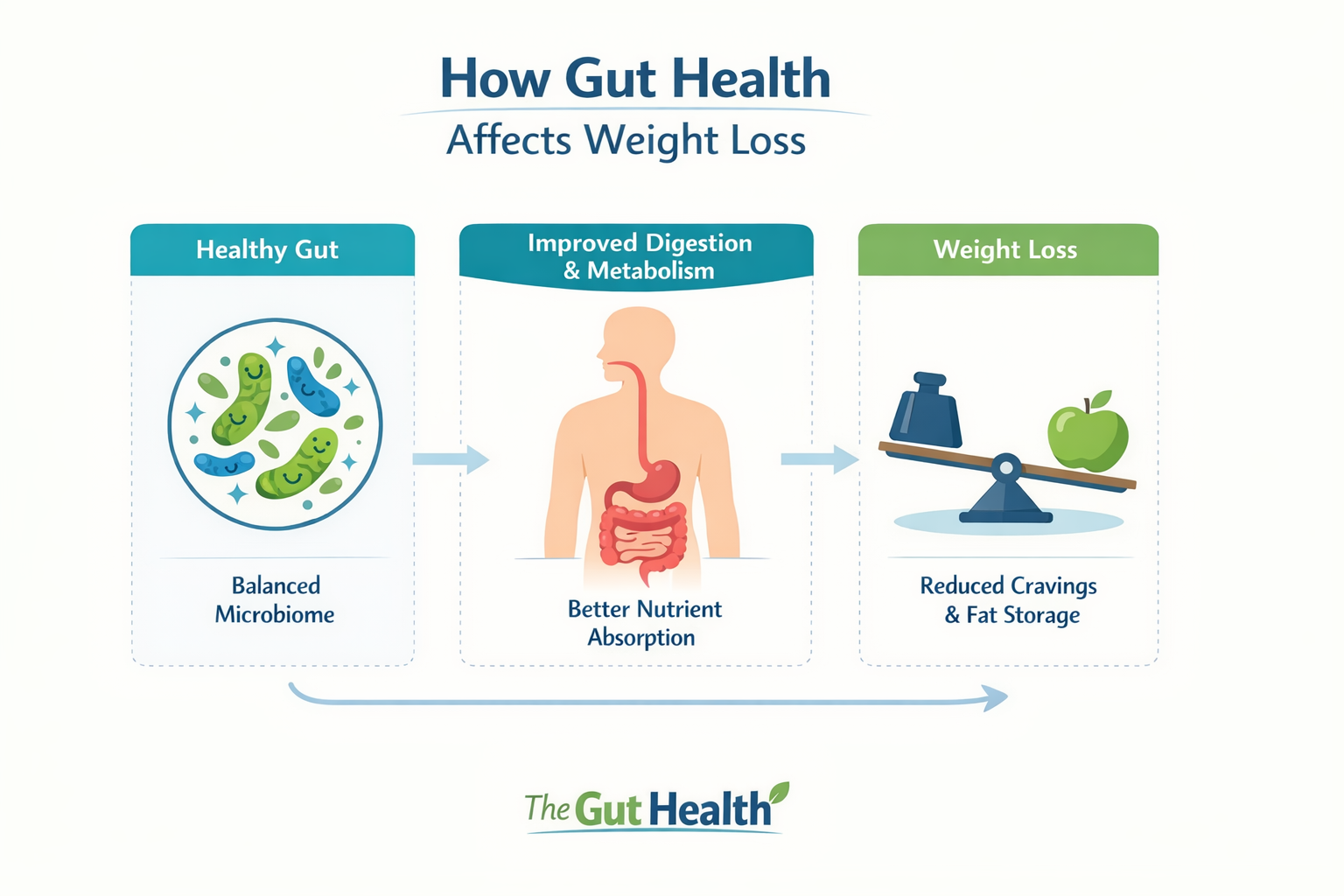
Understanding How Gut Health Influences Weight Loss
Many people focus on diets, workouts, or calorie counting when trying to lose weight. But an area often overlooked is gut health. The connection between gut health and weight loss is becoming clearer as research explores how our digestive system influences metabolism, appetite, and energy balance. For many Indian readers who struggle with weight despite eating carefully, understanding this link can be reassuring and eye-opening.
At The Gut Health, we often explain that the gut is more than a digestive organ. It is an ecosystem that affects how the body processes food, stores fat, and responds to hunger cues. If you wish to explore more topics like this, you can also read similar articles at https://theguthealth.in/blog/.
Why Gut Health Matters for Weight Management
The gut contains trillions of microorganisms that help break down food, produce important compounds, and communicate with the brain. When this balance is disrupted, digestion, appetite, and even mood can shift in ways that may influence weight.
The Gut Microbiome and Metabolism
The gut microbiome plays a role in how efficiently the body extracts energy from food. Some types of gut bacteria help break down complex carbohydrates, while others influence fat storage. A more balanced gut environment may support smoother digestion and metabolic stability.
For instance, traditional Indian meals often include fermented foods like curd, idli, dosa, and pickles. These foods naturally support microbial diversity. When the gut lacks this diversity, digestion may feel sluggish or irregular, making weight management feel more challenging.
Gut Health and Appetite Signals
The gut communicates with the brain through chemical messengers. When the gut is inflamed or imbalanced, these signals may not work as expected. This can lead to irregular hunger cues, cravings, or emotional eating patterns.
A calm, healthy gut environment may better support natural appetite regulation. This doesn’t mean a “perfect gut” leads to automatic weight loss, but it can help the body respond more clearly to hunger and fullness.
How Gut Health Affects Weight Loss Progress
Weight loss is influenced by many factors, but gut health often plays a behind-the-scenes role. Here are a few ways it may shape your experience:
- Digestive comfort: Irregular bowel movements, gas, or bloating may affect energy levels and food choices.
- Inflammation balance: An imbalanced gut environment may influence inflammation levels, which can affect overall well-being.
- Nutrient absorption: The gut helps absorb vitamins and minerals that support metabolism, energy production, and hormone balance.
- Stress response: The gut and brain are closely connected. Stress can affect digestion, and digestive issues can affect mood, sometimes leading to changes in eating habits.
Supporting Gut Health During a Weight Loss Journey
Supporting gut health doesn’t require complicated routines. Small, mindful changes can help create a more balanced environment for digestion and overall well-being.
Include More Fibre-Rich Foods
Fibre feeds beneficial gut bacteria and supports regular bowel movements. In the Indian context, options like fruits, vegetables, dals, millets, oats, and leafy greens work well. Rotating fibre sources can help increase microbial diversity.
Add Fermented Foods Regularly
Foods such as curd, buttermilk, kanji, dhokla, idli, and homemade pickles provide natural probiotics. These can gently support microbial balance without needing supplements.
Stay Hydrated Throughout the Day
Water helps fibre work effectively and supports digestion. Warm water or herbal infusions like jeera water or ginger tea may feel soothing for some people.
Eat Mindfully and Consistently
Eating at very irregular times or eating too quickly may affect digestion. Taking a few moments to sit down, chew properly, and eat without distraction can support both gut comfort and appetite awareness.
Manage Stress in Small, Practical Ways
Since the gut and brain interact closely, stress can affect digestion and appetite. Gentle practices such as short walks, breathing exercises, journaling, or quiet time away from screens can help reduce digestive discomfort.
Get Regular Movement
Activity helps keep digestion flowing. This doesn’t have to be intense exercise. Even walking after meals, stretching through the day, or doing light yoga can support gut function.
When Gut Health Feels Out of Balance
If digestive discomfort, irregularity, or bloating feels persistent, it may help to observe your eating patterns and consider whether your gut might be asking for more fibre, hydration, or consistency. Many articles at https://theguthealth.in explore these topics in simple language. Listening to your body and making small adjustments can be a gentle way of supporting balance.
Conclusion: Gut Health and Weight Loss Go Hand in Hand
Understanding gut health and weight loss offers a more compassionate view of the body. Weight changes don’t depend only on willpower or calories; they are influenced by digestion, microbial balance, stress, sleep, and overall lifestyle. By supporting the gut with simple daily habits, many people find their weight loss journey becomes steadier and more comfortable.
A balanced gut doesn’t promise dramatic results, but it can create a foundation for healthier choices and improved well-being. Whether you are beginning your journey or refining your approach, paying attention to your gut may provide clarity, comfort, and a more sustainable path forward.