
Top Gut Microbiome Foods for a Healthier You
Many people today are paying closer attention to their digestion, immunity, and overall well-being. A big part of this awareness comes from understanding the gut microbiome — the community of trillions of microorganisms living in the digestive tract. What we eat plays an important role in nurturing these microbes. Choosing the right gut microbiome foods can support better digestion, balanced energy levels, and long-term wellness.
In this blog from The Gut Health, we explore the best foods to nourish your gut microbes, especially within the Indian dietary context. You can also find more gut-friendly reads on the blog at https://theguthealth.in/blog/.
Why the Gut Microbiome Matters
The gut microbiome is made up of bacteria, fungi, and other microorganisms that help support digestion and overall balance in the body. While every person’s microbiome is unique, all of us benefit from nurturing it through thoughtful food choices. A diverse and well-fed microbiome supports smoother digestion and helps maintain general wellness.
Best Gut Microbiome Foods to Include Daily
Different types of foods nourish gut microbes in different ways. Some feed beneficial bacteria, others introduce new live cultures, and some provide fiber that supports smoother digestion. Below are some of the most helpful categories of gut microbiome foods to consider adding to your meals.
1. Fermented Foods for Natural Probiotics
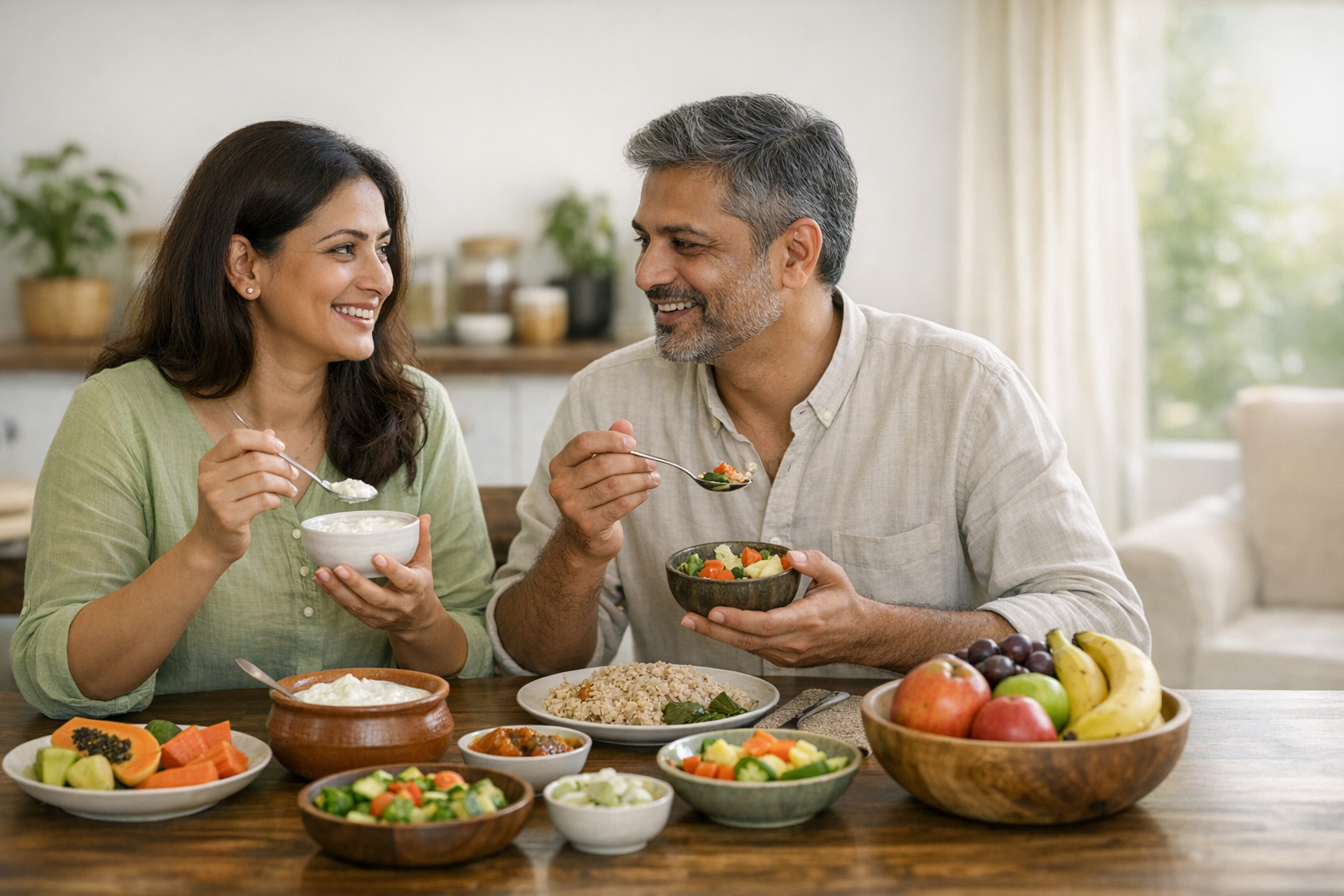
Fermented foods naturally contain live cultures that enrich the gut environment. They have been a part of traditional Indian diets for centuries.
- Curd or dahi – commonly eaten with meals for cooling and digestive comfort
- Buttermilk (chaas) – a light drink often enjoyed after meals
- Idli, dosa batter – naturally fermented, soft, and easy on digestion
- Pickles (traditionally fermented) – small amounts can add beneficial microbes
Including a small amount of fermented foods daily can help introduce diverse microorganisms into the gut.
2. Prebiotic-Rich Foods to Feed Good Bacteria
Prebiotics are types of fiber that nourish beneficial microbes. Many Indian household staples are naturally prebiotic.
- Bananas, especially slightly unripe
- Garlic and onions
- Whole grains like oats, barley, and whole wheat
- Legumes such as chickpeas, rajma, and moong
- Vegetables like carrots, beetroot, and green peas
These foods help support the growth and activity of helpful gut bacteria over time.
3. High-Fiber Foods for Smoother Digestion
Fiber is essential for regular bowel movements and overall digestive comfort. It also plays a role in producing short-chain fatty acids that help maintain gut balance.
- Fruits like apples, papaya, guava, and pears
- Vegetables such as bottle gourd, spinach, and beans
- Whole grains like millets, brown rice, and ragi
- Nuts and seeds, especially flaxseeds and chia seeds
Including a variety of fiber sources ensures that different types of gut bacteria get the nourishment they need.
4. Polyphenol-Rich Foods for Added Support
Polyphenols are antioxidants found in many plants. They are not fully digested by the body, which allows gut microbes to break them down and use them.
- Green tea and herbal teas
- Berries when available
- Kadak chai spices like cloves, cinnamon, and cardamom
- Dark chocolate in small quantities
These foods are easy to include in daily meals and add both flavor and gut-friendly benefits.
How to Build a Gut-Friendly Plate
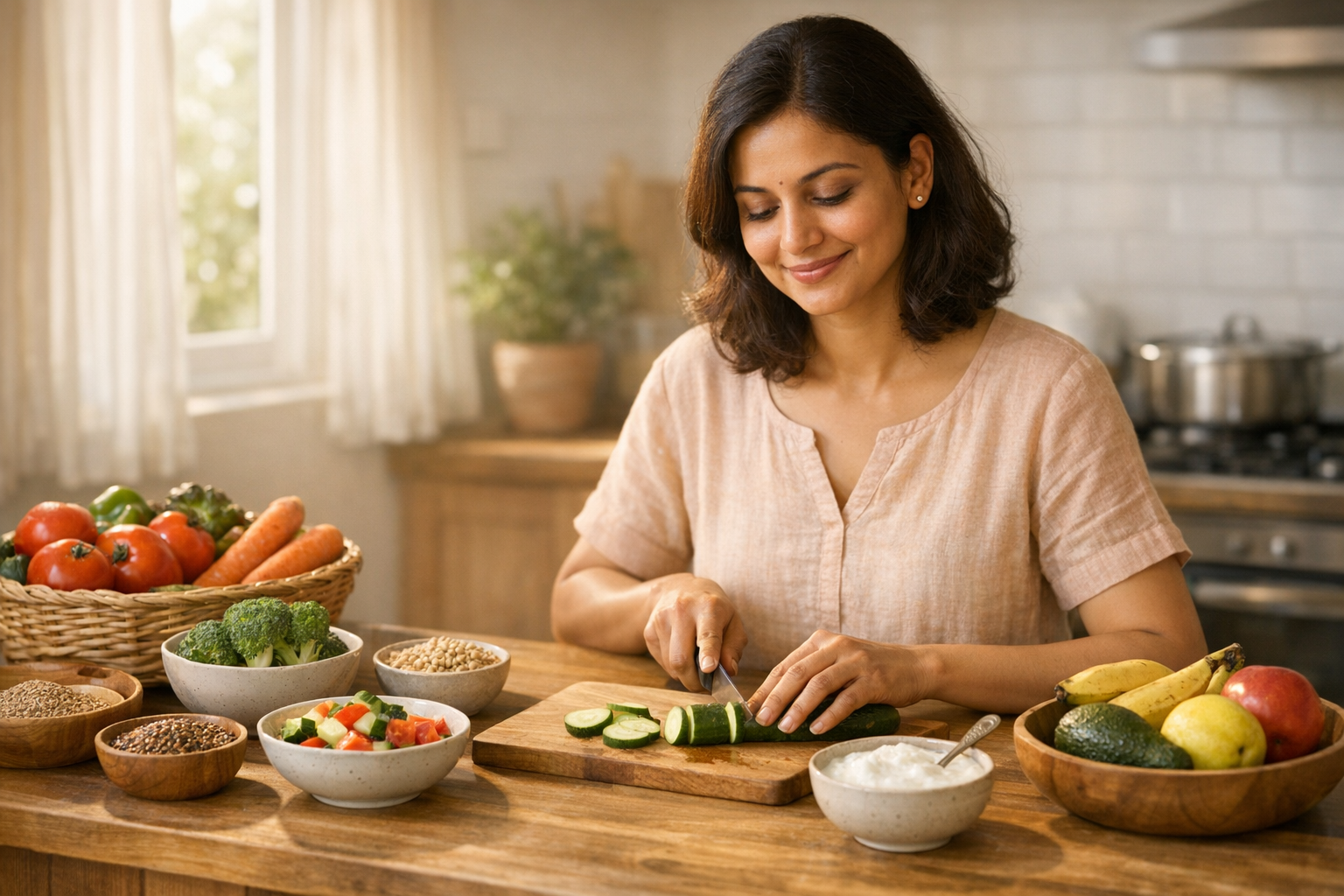
You don’t need a complicated meal plan to support your microbiome. Small, mindful choices throughout the day can make a big difference.
- Add a serving of fresh fruit with breakfast.
- Include fermented foods like curd or buttermilk with lunch.
- Choose whole grains over refined options when possible.
- Fill half your plate with vegetables of different colours.
- Drink enough water through the day to support digestion.
Simple Indian Meal Ideas
- Moong dal khichdi with curd
- Vegetable sambar with idli or dosa
- Roti with sabzi, dal, and a small salad
- Oats upma with vegetables
- Chole with brown rice and a side of cucumber
These meals combine fiber, fermented foods, and natural prebiotics in a way that supports gut balance.
Lifestyle Habits That Complement Gut-Friendly Foods
While food is a major part of gut health, daily habits also play a supportive role.
- Eat meals at regular times when possible.
- Chew food slowly and mindfully.
- Engage in light physical activity like walking or yoga.
- Get enough sleep to give your body time to restore.
- Manage stress through calming practices or hobbies.
These habits help create an environment where your gut microbes can function optimally.
Conclusion: A Gentle Path to Better Gut Health
Choosing the right gut microbiome foods doesn’t have to be overwhelming. By including more fermented foods, colorful vegetables, whole grains, and natural fiber sources, you support the diverse microbes that contribute to your everyday well-being. Small, consistent changes build long-term balance, and even one gut-friendly choice per day can make a meaningful difference.
If you’re curious to learn more about gut health, nutrition, and mindful living, you can continue exploring articles at The Gut Health through https://theguthealth.in.