
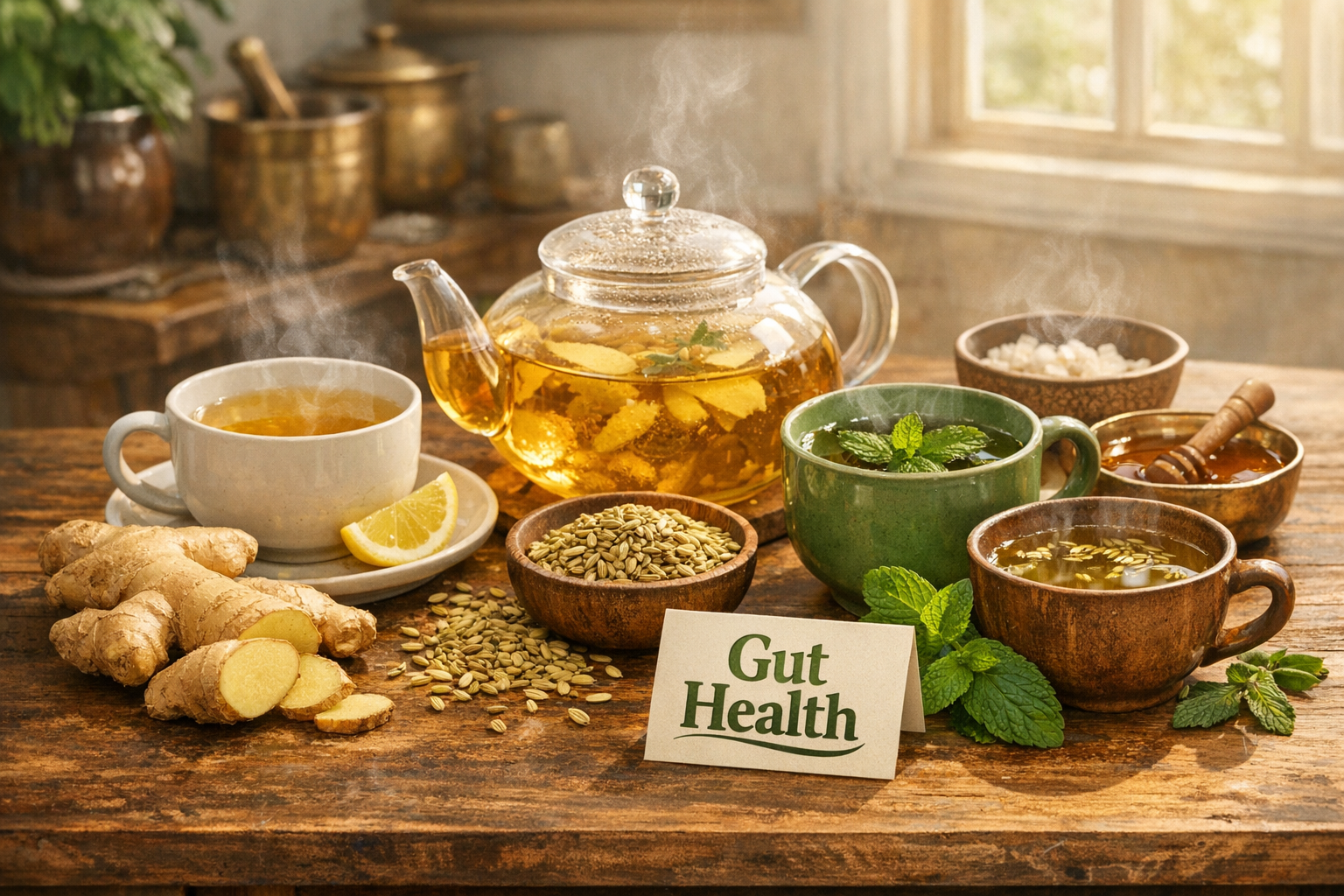
Top Teas for Improved Digestion and Gut Health
The simple act of brewing a warm cup of tea can be deeply comforting, especially after a heavy meal or a long day. Many traditional teas have been used across different cultures, including in India, to support digestion and overall gut comfort. While tea is not a treatment for digestive problems, the natural compounds in certain herbs may help the body feel more at ease. If you’re exploring gentle, everyday ways to care for your gut, choosing the right tea for digestion can be a good start.
This guide brings together some of the most well‑known teas that people commonly use to support digestive wellness, drawn from both traditional practices and modern understanding. For more gut health resources, you can also explore articles at theguthealth.in or theguthealth.in/blog/.
Why Tea Can Be Helpful for Digestion
Tea, whether herbal or traditional, contains natural plant compounds that may influence how we feel after eating. Many herbs have been used in Indian households for generations, not as medicine but as simple, comforting home remedies. Warm beverages can also relax the digestive system and support a sense of comfort.
Some potential benefits people associate with herbal teas include:
- A soothing effect on the stomach
- Supporting natural digestion after meals
- Helping with feelings of heaviness or bloating
- Encouraging hydration, which is essential for healthy digestion
Each tea has unique qualities, so choosing one often depends on individual preference and what feels good for your body.
Best Herbal Tea for Digestion
Ginger Tea
Ginger has long been part of Indian cooking, Ayurvedic traditions, and home remedies. A warm cup of ginger tea can feel grounding and soothing, especially after a large or oily meal. The natural compounds in ginger, such as gingerols, are often associated with digestive comfort.
You can make ginger tea by simmering fresh ginger slices in water or using dried ginger. Adding a drop of honey or a few tulsi leaves enhances the flavour without overwhelming its natural warmth.
Peppermint Tea
Peppermint tea, popular worldwide, is known for its cooling, refreshing taste. Some people find that peppermint helps them feel lighter after meals. It is particularly enjoyed after dinner because of its calming aroma and cooling effect.
If you have a sensitive stomach, start with a mild brew to see how your body responds.
Fennel Tea
In many Indian homes, fennel seeds (saunf) are eaten after meals to support digestion. Brewing fennel tea is simply another way to enjoy its gentle sweetness and digestive benefits. It can be especially soothing when you experience heaviness after eating.
To prepare it, crush lightly roasted fennel seeds and steep them in hot water for a few minutes.
Chamomile Tea
Chamomile tea is often associated with relaxation and calm. Many people enjoy it before bedtime because it helps the body unwind. A relaxed body may digest food more comfortably, especially if stress contributes to digestive discomfort.
This mild, floral tea is ideal if you prefer something gentle and calming.
Lemon Balm Tea
Lemon balm has a light, lemony aroma that is naturally soothing. It is often used for relaxation and may support comfortable digestion. People who prefer mild herbal teas often enjoy lemon balm during the afternoon or in the evening.
Licorice Root Tea
Licorice root tea has a naturally sweet, earthy flavour. It is commonly used in traditional wellness practices for its calming effect on the digestive tract. However, licorice tea should be consumed in moderation, and those with specific health conditions may need to be cautious.
Indian Teas Traditionally Used for Digestive Comfort
Ajwain Tea
Ajwain (carom seeds) is a popular ingredient in Indian kitchens, often used for its strong, distinct aroma and traditional digestive benefits. Ajwain tea, made by boiling the seeds in hot water, has a warming quality that many people find comforting after heavy meals.
Coriander Seed Tea
Coriander seeds are known for their cooling effect and are used in many Indian households. Coriander tea can be made by soaking the seeds overnight or simmering them lightly. It is refreshing, mild, and especially enjoyed during warmer months.
Cinnamon Tea
Cinnamon has a naturally sweet flavour and is often paired with ginger or clove in herbal tea blends. A warm cup of cinnamon tea may help you feel relaxed and comfortable after meals.
How to Choose the Right Tea for Yourself
Every person’s digestive system is unique, and what works well for one individual may feel different for another. When choosing a tea, consider the following:
- Your taste preferences, such as strong and spicy vs. light and floral
- How your body usually responds to warm beverages after meals
- Any sensitivity to caffeine, especially if drinking tea in the evening
- Whether you prefer single herbs or blended flavours
It can be helpful to try one tea at a time for a few days to notice how your body responds. Keep the preparation simple and avoid adding too many sweeteners or heavy ingredients.
Tips for Making Digestive Teas More Effective
Tea can be even more enjoyable when paired with mindful habits. Consider these simple practices:
- Drink tea slowly rather than in a hurry.
- Enjoy it warm, not boiling hot.
- Have herbal tea 20–30 minutes after meals for gentle digestive support.
- Stay consistent with hydration throughout the day.
- Combine tea with balanced meals rich in fibre, vegetables, and whole foods.
Remember that tea is just one element of a gut-friendly routine. Your overall lifestyle and eating habits play a much bigger role in how your digestive system feels.
Conclusion: Finding the Right Tea for Digestion
Choosing the right tea for digestion is a simple and enjoyable way to support everyday gut comfort. Whether you prefer ginger’s warmth, peppermint’s freshness, or fennel’s sweetness, each tea offers a gentle experience that can be part of a balanced lifestyle.
There is no single best option for everyone. The key is to explore, experiment, and notice what feels good for your body. With small, mindful habits and nourishing food choices, tea can become a peaceful ritual that supports your overall sense of wellbeing.